Forming Your Thesis Statement
http://www.wisc.edu/writing/Handbook/Thesis.html
Opening Your Draft
http://www.nutsandboltsguide.com/beginning.html
Developing the Middle
http://www.nutsandboltsguide.com/middle.htm
Ending Your Draft
http://www.nutsandboltsguide.com/ending.html
Revising Your Voice and Style
http://www.nutsandboltsguide.com/plainstyle.htm
Revising Collaboratively
http://www.wisc.edu/writing/Handbook/PeerReviews.html
Using the Writing Center
http://www.ruf.rice.edu/~riceowl/
Avoiding Imprecise, Misleading, and Biased Words
http://www.bartleby.com/62/
Also, for help with specific word-choice challenges like wordiness, take this quiz.
http://college.hmco.com/cgi-bin/SaCGI.cgi/ace1app.cgi?FNC=AcePresent__Apresent_html___eng_elibrary49
Monday, September 3, 2007

E82 Textbook Online
For English 82A -- Written Communication -- our course textbook, The College Writer, has the following excellent web site:
http://college.hmco.com/english/vandermey/college_writer/1e/students/
Sunday, September 2, 2007
E82A Syllabus Fall 2007
WRITTEN COMMUNICATION I
ENGLISH 82A
Units: 3
Prerequisite/Co-requisite Courses: None
Instructor: Dr. Sylvia Y. R. Schoemaker
Phone: 510.628.8036
E-mail: drsylvia2007@gmail.com
Office Hours: T-Th 9-9:30, 12; 15-1 and by arrangement
Required Text:
VanderMey et al. The College Writer. 2nd Edition. Boston: Houghton Mifflin Company, 2007.
Recommended Texts:
Clouse, Barbara Fine. A Troubleshooting Guide for Writers: Strategies & Process.4th Ed. Boston: Mc-Graw-Hill, 2005.
Adams, Katherine H. and Michael L. Keene, Research and Writing across the Disciples 2nd Ed. Mountain View, CA: Mayfield Publishing Company, 2000.
Dictionary, thesaurus
(Revision date:9/2007)
DESCRIPTION
English 82A covers the aspects of composing well-organized written communications. The core of the course will emphasize practice in organizing ideas in a clear, logical manner and other elements involved in writing papers in various rhetorical contexts.
COURSE DESCRIPTION (CURRENT UNIVERSITY CATALOG):
ENG 82A 82B - WRITTEN COMMUNICATION I & II
First term: A thorough study of grammar and the fundamentals of composition. Practice in writing themes, book reviews and other short papers is given. Particular attention is directed toward sentence structure, syntax, and general rhetorical principles. Second term: Critical reading and evaluation of selected texts and writings; composition of well-organized expository papers; a careful consideration of methods of research, organization in a clear, logical manner and other elements involved in writing research papers. (3 + 3 units)
OBJECTIVES
You will develop your writing skills for academic, professional, and socio-cultural purposes, in context-centered essay writing. You will learn editing, documentation skills, use of online and other resources
University learner goals 1 -6, and specifically in English:: To develop basic
academic and professional skills (1); To develop the ability to communicate
effective in English, orally and in writing, and to read with understanding
(1.1) and institutional goals , especially 1,(1.1-1.4), 2.4
FORMAT
The course sessions will include presentation, demonstration, discussion, and application modes.
POLICIES
Assignments are to be submitted in a timely manner. Late work will receive reduced points and must be accompanied with a written explanation for its tardiness. Plagiarized work will receive 0 points, and if persistent will result in course failure. All assignments must be typed, include in the top right hand corner your name, course, date submitted, assignment name and revision number.
Attendance is mandatory. Missed classes will constitute 0 points for the day’s class participation points. Excused absences are limited to serious medical or other problems, and are to be explained in writing either before or immediately after the absence. Persistent unexcused absences will result in course failure.
STUDENT RESPONSIBILITIES
Students are expected to attend class, complete assignments, and to participate in individual and group work in a productive manner, and to take personal responsibility for meeting the objectives of the course.
ASSIGNMENTS
Overall Schedule:
For each chapter: summaries, maps, exercises. Three unit essays. Midterm and final with ePortfolios/blogs that include the essays for each unit, notes, reference data, in-class materials, and individual and group assignments. (See Assignments)
Assignments | |
Each chapter contains an Intro, an Overview, Guidelines, and Writing Checklist/Activities. | |
1 Intro | I. A Rhetoric: College Student's Guide to Writing |
Brief Overview Chapters | I. A Rhetoric: College Student's Guide to Writing |
Unit I | Narrative, Descriptive, and Reflective Writing |
9. Forms of College Writing | |
10. Narration and Description | |
"Mzee Owitti" by Jacqui Nyangi Owitti | |
"That Morning on the Prairie" by James C. Schaap | |
"A Hanging" by George Orwell | |
"Sunday in the Park" by Bel Kaufman | |
"Northing" by Annie Dillard | |
11. Description and Reflection | |
"The Stream in the Ravine" by Nicole Suurdt | |
"Call Me Crazy But I Have to Be Myself" by Mary Seymour | |
"None of This Is Fair" by Richard Rodriguez | |
"Who Shot Johnny?" by Debra Dickerson | |
Week 5 | Unit I (Narrative, Descriptive, and Reflective Writing) Paper Due |
Unit II | Unit II -- Analytical Writing |
12. Cause and Effect | |
"Adrenaline Junkies" by Sarah Hanley | |
"The Legacy of Generation N" by Christy Haubegger | |
"Our Tired, Our Poor, Our Kids" by Anna Quindlen | |
13. Comparison and Contrast | |
"A Fear Born of Sorrow" by Anita Brinkman | |
"Two Views of the River" by Mark Twain | |
"Shrouded in Contradiction" by Gelareh Asayesh | |
"Like Mexicans" by Gary Soto | |
14. Classification | |
"Three Family Cancers" by Kim Brouwer | |
"Four Ways to Talk About Literature" by John Van Rys | |
"No Wonder They Call Me a Bitch" by Ann Hodgman | |
15. Process Writing | |
"Wayward Cells" by Kerri Mertz | |
"Downloading Photographs from the MC-150 Digital Camera" (from WFB) | |
"Hair Today, Gone Tomorrow" by Verne Meyer | |
"Campus Racism 101" by Nikki Giovonni | |
16. Definition | |
"The Gullible Family" by Mary Beth Bruins | |
"Understanding Dementia" by Sarah Anne Morelos | |
"Deft or Daft" by David Schelhaas | |
On Excellence by Cynthia Ozick | |
Week 10 | Unit II (Analytical Writing) Paper Due |
Unit III | Persuasive Writing |
17. Strategies for Argumentation and Persuasion | |
18. Taking a Position | |
"An Apology for Ms. Barbie D. Doll" by Rita Isakson | |
"In Defense of the Animals" by Meg Greenfield | |
"Apostles of Hatred Find It Easy to Spread Their Message" by Leonard Pitts Jr. | |
"Pornography" by Margaret Atwood | |
"Demystifying Multiculturalism" by Linda Chavez | |
19. Persuading Readers to Act | |
"To Drill or Not to Drill" by Rebecca Pasok | |
"Soul of a Citizen: Living with Conviction in a Cynical Time" by Paul Rogat Loeb | |
"I Have a Dream" by Dr. Martin Luther King, Jr. | |
"The Media's Image of Arabs" by Jack G. Shaheen | |
20. Proposing a Solution | |
"Preparing for Agroterror" by Brian Ley | |
"Uncle Sam and Aunt Samantha" by Anna Quindlen | |
"The Media and the Ethics of Cloning" by Leigh Turner | |
Week 15 | Unit III (Persuasive Writing) Paper Due |
STUDENT EVALUATION
Students are evaluated on the basis of class work, written assignments, quizzes, midterm and final exams, with grades proportionate to the following values:
Content | Points | Percent |
Attendance & Class Participation | 35 | 15% |
Research Journal/Portfolio | 50 | 22% |
Quizzes /tests /exercises | 50 | 22% |
Papers | 60 | 26% |
Presentations | 35 | 15% |
Totals | 230 | 100% |
Percent | Letter Grade |
90-100 | A |
80-89 | B |
70-79 | C |
60-69 | D |
Below 60 | F |
Saturday, September 1, 2007
Assignments
1 Intro 8-28-9-3 | I. A Rhetoric: College Student's Guide to Writing |
| Brief Overview Chapters | Reading, Thinking, Viewing, and Writing 1. Critical Thinking Through Reading, Viewing, and Writing The Writing Process 2. Beginning the Writing Process 3. Planning 4. Drafting 5. Revising 6. Editing and Proofreading 7. Submitting, Writing, and Creating Portfolios The College Essay 8. One Writer's Process |
-------------- Unit I | Narrative, Descriptive, and Reflective Writing |
| 9-10-9-24 | 9. Forms of College Writing Narrative, Descriptive, and Reflective |
| 10. Narration and Description | |
| "Mzee Owitti" by Jacqui Nyangi Owitti | |
| "That Morning on the Prairie" by James C. Schaap | |
| "A Hanging" by George Orwell | |
| "Sunday in the Park" by Bel Kaufman | |
| "Northing" by Annie Dillard | |
| 11. Description and Reflection | |
| "The Stream in the Ravine" by Nicole Suurdt | |
| "Call Me Crazy But I Have to Be Myself" by Mary Seymour | |
| "None of This Is Fair" by Richard Rodriguez | |
| "Who Shot Johnny?" by Debra Dickerson | |
Week 5 9-24 | Unit I (Narrative, Descriptive, and Reflective Writing) Paper Due |
-------------- Unit II | Unit II -- Analytical Writing |
| 12. Cause and Effect | |
| "Adrenaline Junkies" by Sarah Hanley | |
| "The Legacy of Generation N" by Christy Haubegger | |
| "Our Tired, Our Poor, Our Kids" by Anna Quindlen | |
| 13. Comparison and Contrast | |
| "A Fear Born of Sorrow" by Anita Brinkman | |
| "Two Views of the River" by Mark Twain | |
| "Shrouded in Contradiction" by Gelareh Asayesh | |
| "Like Mexicans" by Gary Soto | |
| 14. Classification | |
| "Three Family Cancers" by Kim Brouwer | |
| "Four Ways to Talk About Literature" by John Van Rys | |
| "No Wonder They Call Me a Bitch" by Ann Hodgman | |
| 15. Process Writing | |
| "Wayward Cells" by Kerri Mertz | |
| "Downloading Photographs from the MC-150 Digital Camera" (from WFB) | |
| "Hair Today, Gone Tomorrow" by Verne Meyer | |
| "Campus Racism 101" by Nikki Giovonni | |
| 16. Definition | |
| "The Gullible Family" by Mary Beth Bruins | |
| "Understanding Dementia" by Sarah Anne Morelos | |
| "Deft or Daft" by David Schelhaas | |
| On Excellence by Cynthia Ozick | |
Week 10 10-30 | Unit II (Analytical Writing) Paper Due |
-------------- Unit III | Persuasive Writing |
| 11-6- 12-4 | 17. Strategies for Argumentation and Persuasion |
| 18. Taking a Position | |
| "An Apology for Ms. Barbie D. Doll" by Rita Isakson | |
| "In Defense of the Animals" by Meg Greenfield | |
| "Apostles of Hatred Find It Easy to Spread Their Message" by Leonard Pitts Jr. | |
| "Pornography" by Margaret Atwood | |
| "Demystifying Multiculturalism" by Linda Chavez | |
| 19. Persuading Readers to Act | |
| "To Drill or Not to Drill" by Rebecca Pasok | |
| "Soul of a Citizen: Living with Conviction in a Cynical Time" by Paul Rogat Loeb | |
| "I Have a Dream" by Dr. Martin Luther King, Jr. | |
| "The Media's Image of Arabs" by Jack G. Shaheen | |
| 20. Proposing a Solution | |
| "Preparing for Agroterror" by Brian Ley | |
| "Uncle Sam and Aunt Samantha" by Anna Quindlen | |
| "The Media and the Ethics of Cloning" by Leigh Turner | |
| Week 15 12-4 | Unit III (Persuasive Writing) Paper Due |
Thursday, August 30, 2007
Required and Recommeded Texts
Required Text
Title: Strategic Reading 1 Building Effective Reading Skills 2003
Author: Richards, Jack C and Samuela Eckstut-Didier
Publisher: Cambridge
ISBN: 0521555809
Recommended Text:
Title: Interactions 1 -- Reading (Silver Edition) 2007
Author: Kirn, Elaine and Pamela Hartmann
Publisher: McGraw Hill
ISBN-13: 9780073138114
Wednesday, August 29, 2007
Tuesday, August 28, 2007
Introductory Interview
Introductory Interview (Groups 1 - 4):
Pick a group reporter to introduce and present the information for the group
3 things that are interesting and true about each member of the group
1 thing that is interesting and false about each member of the group
Summary information:
Demographics
Who, what, when, where, why, how
Pick a group reporter to introduce and present the information for the group
3 things that are interesting and true about each member of the group
1 thing that is interesting and false about each member of the group
Summary information:
Demographics
Who, what, when, where, why, how
Required Text
The College Writer
VanderMey
Second Edition
ISBN-13:9780618642052
ISBN-10:061874252056
Houghton Mifflin, 2007
VanderMey
Second Edition
ISBN-13:9780618642052
ISBN-10:061874252056
Houghton Mifflin, 2007
Where do you stand?
Where do you stand?
FEET: What do I stand for as a foundation of writing?
STOMACH: What upsets me about writing?
HEART: What do I love about writing?
HANDS: What do I feel about writing?
EARS: What do I hear about writing?
EYES: What do I see about writing?
BRAIN: What do I think about writing?
FEET: What do I stand for as a foundation of writing?
STOMACH: What upsets me about writing?
HEART: What do I love about writing?
HANDS: What do I feel about writing?
EARS: What do I hear about writing?
EYES: What do I see about writing?
BRAIN: What do I think about writing?
Tuesday, July 31, 2007
Tuesday, July 17, 2007
"Is of Identity" and E-prime
TOWARD UNDERSTANDING E -PRIME
Robert Anton Wilson
E-PRIME, abolishing all forms of the verb "to be," has its roots in the field of general semantics, as presented by Alfred Korzybski in his 1933 book, Science and Sanity. Korzybski pointed out the pitfalls associated with, and produced by, two usages of "to be": identity and predication. His student D. David Bourland, Jr., observed that even linguistically sensitive people do not seem able to avoid identity and predication uses of "to be" if they continue to use the verb at all.
Bourland pioneered in demonstrating that one can indeed write and speak without using any form of "to be," calling this subset of the English language "E-Prime." Many have urged the use of E-Prime in writing scientific and technical papers.
Korzybski felt that all humans should receive training in general semantics from grade school on, as "semantic hygiene" against the most prevalent forms of logical error, emotional distortion, and "demonological thinking." E-Prime provides a straightforward training technique for acquiring such semantic hygiene.
To understand E-Prime, consider the human brain as a computer. (Note that I did not say the brain "is" a computer.) As the Prime Law of Computers tells us, GARBAGE IN, GARBAGE OUT (GIGO, for short). The wrong software guarantees wrong answers. Conversely, finding the right software can "miraculously" solve problems that previously appeared intractable.
It seems likely that the principal software used in the human brain consists of words, metaphors, disguised metaphors, and linguistic structures in general.
The Sapir-Whorf-Korzybski Hypothesis, in anthropology, holds that a change in language can alter our perception of the cosmos. A revision of language structure, in particular, can alter the brain as dramatically as a psychedelic. In our metaphor, if we change the software, the computer operates in a new way.
Consider the following paired sets of propositions, in which Standard English alternates with English-Prime (E-Prime):
lA. The electron is a wave.
lB. The electron appears as a wave when measured with instrument-l.
2A. The electron is a particle.
2B. The electron appears as a particle when measured with instrument-2.
3A. John is lethargic and unhappy.
3B. John appears lethargic and unhappy in the office.
4A. John is bright and cheerful.
4B. John appears bright and cheerful on holiday at the beach.
5A. This is the knife the first man used to stab the second man.
5B. The first man appeared to stab the second man with what looked like a knife to me.
6A. The car involved in the hit-and-run accident was a blue Ford.
6B. In memory, I think I recall the car involved in the hit-and-run accident as a blue Ford.
7A. This is a fascist idea.
7B. This seems like a fascist idea to me.
8A. Beethoven is better than Mozart.
8B. In my present mixed state of musical education and ignorance, Beethoven seems better to me than Mozart.
9A. That is a sexist movie.
9B. That seems like a sexist movie to me.
10A. The fetus is a person.
10B. In my system of metaphysics, I classify the fetus as a person.
The "A"-type statements (Standard English) all implicitly or explicitly assume the medieval view called "Aristotelian essentialism" or "naive realism." In other words, they assume a world made up of block-like entities with indwelling "essences" or spooks- "ghosts in the machine."
The "B"-type statements (E-Prime) recast these sentences into a form isomorphic to modern science by first abolishing the "is" of Aristotelian essence and then reformulating each observation in terms of signals received and interpreted by a body (or instrument) moving in space-time.
Relativity, quantum mechanics, large sections of general physics, perception psychology, sociology, linguistics, modern math, anthropology, ethology, and several other sciences make perfect sense when put into the software of E-Prime. Each of these sciences generates paradoxes, some bordering on "nonsense" or "gibberish," if you try to translate them back into the software of Standard English.
Concretely, "The electron is a wave" employs the Aristotelian "is" and thereby introduces us to the false-to-experience notion that we can know the indwelling "essence" of the electron. "The electron appears as a wave when measured by instrument-1" reports what actually occurred in space-time, namely that the electron when constrained by a certain instrument behaved in a certain way.
Similarly, "The electron is a particle" contains medieval Aristotelian software, but "The electron appears as a particle when measured by instrument-2" contains modern scientific software. Once again, the software determines whether we impose a medieval or modern grid upon our reality-tunnel.
Note that "the electron is a wave" and "the electron is a particle" contradict each other and begin the insidious process by which we move gradually from paradox to nonsense to total gibberish. On the other hand, the modern scientific statements "the electron appears as a wave when measured one way" and "the electron appears as a particle measured another way" do not contradict, but rather complement each other. (Bohr's Principle of Complementarity, which explained this and revolutionized physics, would have appeared obvious to all, and not just to a person of his genius, if physicists had written in E-Prime all along. . . .)
Looking at our next pair, "John is lethargic and unhappy" vs. "John is bright and cheerful,' we see again how medieval software creates metaphysical puzzles and totally imaginary contradictions. Operationalizing the statements, as physicists since Bohr have learned to operationalize, we find that the E-Prime translations do not contain any contradiction, and even give us a clue as to causes of John's changing moods. (Look back if you forgot the translations.)
"The first man stabbed the second man with a knife" lacks the overt "is" of identity but contains Aristotelian software nonetheless. The E-Prime translation not only operationalizes the data, but may fit the facts better-if the incident occurred in a psychology class, which often conduct this experiment. (The first man "stabs," or makes stabbing gestures at, the second man, with a banana, but many students, conditioned by Aristotelian software, nonetheless "see" a knife. You don't need to take drugs to hallucinate; improper language can fill your world with phantoms and spooks of many kinds.)
The reader may employ his or her own ingenuity in analyzing how "is-ness" creates false-to-facts reality-tunnels in the remaining examples, and how E-Prime brings us back to the scientific, the operational, the existential, the phenomenological--to what humans and their instruments actually do in space-time as they create observations, perceptions, thoughts, deductions, and General Theories.
I have found repeatedly that when baffled by a problem in science, in "philosophy," or in daily life, I gain immediate insight by writing down what I know about the enigma in strict E-Prime. Often, solutions appear immediately-just as happens when you throw out the "wrong" software and put the "right" software into your PC. In other cases, I at least get an insight into why the problem remains intractable and where and how future science might go about finding an answer.
This text comes from:
D. David Bourland, Jr. & Paul Dennithorne Johnston, "To Be or Not: An E-Prime Anthology," International Society for General Semantics, 1991, pp. 23-26
Tuesday, July 10, 2007
Reading Interrogatives
Ask yourself the following questions as you read:
What is the topic of the book or reading?
What issues are addressed?
What conclusion does the author reach about the issue(s)?
What are the author's reasons for his or her statements or belief?
Is the author using facts, theory, or faith?
Facts can be proven
Theory is to be proved and should not be confused with fact
Opinions may or may not be based on sound reasoning
Faith is not subject to proof by its nature
Has the author used neutral words or emotional words?
Critical readers look beyond the language to see if the reasons are clear
Be aware of why you do, or do not, accept arguments of the author
Characteristics of Critical Thinkers
They are honest with themselves
They resist manipulation
They overcome confusion
They ask questions
They base judgments on evidence
They look for connections between subjects
They are intellectually independent
Flash exercise contributed by Jennifer Kelly and Dr. Brad Hokanson, Interactive Media (DHA 4384) School of Design, University of Minnesota.
See also:
Mindquest Academy's free course "Effective Reading" with sections on
Reading Profile, Building Vocabulary, Understanding, Using Patterns.
See the index if you wish to register with an instructor
Ruth Sunda & Kyrene de las Brisas: Bloom’s Critical Thinking/Questioning Strategies (9/26/02)
Wakefield, D.V., From a paper to the Governor's Teaching Fellows, Athen,s Georgia, November 19, 1998.
Thursday, July 5, 2007
Story A
STORY A
(1)A certain west coast university scientist chartered a ship for exploration purposes.
(2) When a large white bird was sighted the scientist asked permission to kill it.
(3)He stated that white albatrosses are usually found only off the cost of Australia.
(4)He wanted the bird as a specimen for the university museum.
(5)The crew protested against the killing of the bird, calling the scientist’s attention to the old sea superstition that bad luck followed the killing of a white albatross.
(6)Nevertheless the captain granted permission to kill the bird and the bird was killed.
(7)These mishaps happened after the bird was killed:
(8)The net cables fouled up three times.
(9)The net caught on the bottom and was ripped to shreds.
(1O)The shaft on the main winch snapped and it took the crew members five hours to reel in by hand 1700 feet of cable.
(1 1)A rib was broken when Jackie Larson, a scientific aide, fell down a hatch ladder.
(12)The scientist became seasick for the first time in his life.
(13)Lost gear forced the ship to head for land.
(14)The cook left his job.
Story A Questions
Questions on Story A
1 .The scientist had never been seasick before.
2.The purpose of the voyage was primariiy pleasure and sight-seeing.
3.The story lists various incidents which follow the killing of a bird.
4.After the scientist shot the albatross the troubles happened.
5.No scientist’s name was mentioned in the story.
6.The scientist was surprised to see a white albatross in the vicinity.
7.The scientist was not from a university or college.8.The scientist asked the captain for permission to kill the bird.
9.It took the crew members less than five minutes to reel in the seventeen hundred feet of cable,
1O.A lost gear made it necessary for the ship to return to the west coast.
11 .Fortunately, the net cables never fouled up.
12.A ship was chartered by a scientist.
13.The net was ripped in the bottom of the sea.
14.The cook was fired because of his objection to the killing of the bird.
15 .Larson broke a leg.
1 6.After the bird was killed the mishaps occurred.
17.The white albatross was sighted near Australia.
1 8.When an albatross was sighted flying near the ship the scientist asked permission to kill it.
19.The net was not damaged.
20.The troubles happened after the albatross was killed.
21 .The scientist was less influenced by the old sea superstition than were the members of the crew.
22.The ship, propelled by a motor, was in difficulty after the gear broke.
23 .Permission to kill the bird was given by the captain.
24. Seventeen hundred feet of cable were reeled in by hand.
25 .The bird that was killed was an albatross.
26.The sailors were not disturbed when the scientist violated the old sea superstition.
27.The person who fell down a hatch ladder was a man named Larson.
28.Larson broke one of the ribs of the ship.
29.The scientist did not want the bird as a specimen for the university museum.
30.The naturalist did not charter the ship.
31 .The scientist did not asked the crew for permission to kill the albatross.
32.The scientist attention was called to the old sea superstition that bad luck follows the killing of the white albatross.
33.The naturalist did not ask permission to kill the bird on order to secure it as a museum specimen.
34.The scientist expected to see a white albatross in that vicinity.
35 .The scientist was influenced by the warning of the crew.
36.The cook did not leave his job.
37.The captain broke one of his ribs.
38 .The bird was killed against the captains orders.
3 9.The crew members were only to frighten the scientist by protesting against the killing of the bird.
40.A lost gear was not the reason the ship landed.
41 .The crew protested against the killing of the bird.
42.Jackie Larson became seasick before the albatross was killed.
43.The scientist’s aide was Jackie Larson.
44.The bird was not killed.
45.The bird was killed by scientist.
46.The cook helped reel in the seventeen hundred feet of cable.
47.While the crew men were undoubtedly upset by the scientist’s action the cook was the only man to actually leave his job.
48.A scientist fell down a hatch ladder.
Tuesday, July 3, 2007
Prepositions: Spaptial Relationships

pre-position
post-position
re-position
Prepositions of Position
at the back of
at the bottom of
at the top of
behind
between
in the corner of
in the middle of
next to
to the left of
on the other side of
to the right of
on the side of
on top of
opposite
Thursday, June 28, 2007
Tuesday, June 26, 2007
Unit 5: Weather Vocabulary
from http://www.bom.gov.au/info/wwords/
Description of Phenomena
Fog: Suspension of very small water droplets in the air, reducing visibility at ground level to less than a kilometer.
Smog: Smog ( contraction for 'smoke fog') is a fog in which smoke or other forms of atmospheric pollutant have an important part in causing the fog to thicken, and have unpleasant and dangerous physiological effects.
Mist: Similar to fog, but visibility remains more than a kilometre.
Frost: Deposit of soft white ice crystals or frozen dew drops on objects near the ground; formed when surface temperature falls below freezing point.
Precipitation: Any or all of the forms of water particles, whether liquid (e.g. rain, drizzle) or solid (e.g. hail, snow), that fall from a cloud or group of clouds and reach the ground. (See Drizzle, Rain)
Drizzle: Fairly uniform precipitation composed exclusively of very small water droplets (less than 0.5 mm in diameter) very close to one another.
Rain: Precipitation of liquid water drops greater than 0.5 mm in diameter. In contrast to showers, it is steadier and normally falls from stratiform (layer) cloud.
Showers: Usually begin and end suddenly. Relatively short-lived, but may last half an hour. Often, but not always, separated by blue sky.
Blizzard: Violent and very cold wind which is laden with snow, some part, at least, of which has been raised from snow covered ground.
Thunderstorms: Thunderstorms are one or more convective clouds in which electrical discharge can be seen as lightning and heard as thunder by a person on the earth's surface.
A severe thunderstorm produces one or more of :-
hail at the ground with diameter of 2 cm or more;
wind gusts at the ground of 90 km/h or more;
tornadoes; or
very heavy rain likely to cause flash flooding.
Tornado: A tall, rapidly rotating column of air between 5 and 1000 metres in diameter which is attached to the base of a cumulonimbus or large cumulus cloud and which is capable of producing damage at the earth's surface.
Precipitation
Duration
Brief: Short duration.
Intermittent: Precipitation which ceases at times.
Occasional: Precipitation which while not frequent, is recurrent.
Frequent: Showers occurring regularly and often.
Continuous: Precipitation which does not cease, or ceases only briefly.
Periods of Rain: Rain is expected to fall most of the time, but there will be breaks.
Back to Menu
--------------------------------------------------------------------------------
Intensity
Slight or Light:
Rain: Individual drops easily identified, puddles form slowly, small streams may flow in gutters.
Drizzle: Can be felt on the face but is not visible. Produces little run off from roads or roofs. Generally visibility is reduced, but not less than 1000 m.
Snow: Small sparse flakes. Visibility generally reduced but not less than 1000 m.
Hail: Sparse hailstones of small size, often mixed with rain.
Moderate:
Rain: Rapidly forming puddles, down pipes flowing freely, some spray visible over hard surfaces.
Drizzle: Window and road surfaces streaming with moisture. Visibility generally between 400 and 1000 m.
Snow: Large numerous flakes and visibility generally between 400-1000 m.
Hail: Particles numerous enough to whiten the ground.
Heavy:
Rain: Falls in sheets, misty spray over hard surfaces, may cause roaring noise on roof.
Drizzle: Visibility reduced to less than 400 m.
Snow: Numerous flakes of all sizes. Visibility generally reduced below 400 m.
Hail: A proportion of the hailstones exceed 6 mm diameter.
Back to Menu
--------------------------------------------------------------------------------
Distribution of Showers(or other weather phenomena)
Few: Indicating timing, not an area.
Isolated: Showers which are well separated in space during a given period.
Local: Restricted to relatively small areas.
Patchy: Occurring irregularly over an area.
Scattered: Irregularly distributed over an area. Showers which, while not widespread, can occur anywhere in an area. Implies a slightly greater incidence than isolated.
Sporadic: Scattered or dispersed in respect of locality or local distribution. Characterised by occasional or isolated occurrence.
Widespread: Occurring extensively throughout an area.
Back to Menu
--------------------------------------------------------------------------------
Wind Terms
The wind is a continuous succession of gusts and lulls associated with equally rapid changes of direction over a range which may exceed 30°. The mean wind speed over a period of time is therefore the mean of many gusts and lulls. Usually only the mean wind is forecast, unless the gusts are expected to be a significant feature. For instance, Fresh, gusty southwest winds indicates that the mean wind speed will be between 17 and 21 knots and the mean wind direction will be from the southwest, but that there will also be gusts to speeds significantly higher than the mean.
Gust: A gust is any sudden increase of wind of short duration, usually a few seconds.
Squall: A squall comprises a rather sudden increase of the mean wind speed which lasts for several minutes at least before the mean wind returns to near its previous value. A squall may include many gusts.
Wind descriptions (derived from the Beaufort Wind Scale) Wind speeds are given as the equivalent speed at a standard height of 10 metres above open flat ground
Student Blogs
Mathew's Blog for Reading Comprehension:
http://4rc.blogspot.com
Eve's Blog for Reading Comprehension:
http://eve4rc.blogspot.com/
http://4rc.blogspot.com
Eve's Blog for Reading Comprehension:
http://eve4rc.blogspot.com/
Inference discussion items
Humans automatically "fill-in the blanks" whenever we hear a story, and don't usually try to separate what we know "for sure" from what we infer "for sure". Once a person makes an inference, s/he is reluctant to accept that it might not be true.
Uncritically accepting an inference makes it easier to accept related inferences as true.
Uncritically accepting an inference makes it likely a person will reject conflicting inferences.
Arguments, even wars, can result from a failure to examine and verify inferences.
Any given inference can prove to be true.
Any given inference can prove to be false.
Once you begin thinking about an observation, many possible inferences from it come to mind.
Contradictory inferences can be drawn from the same observation.
Uncritical Inference Test: Billy and Tom
The Story
Billy and Tom were lifelong friends. Everything they did was with the other in mind. They had even considered going into the ministry together, but had decided against it at the last minute.
Both were happy with the way things had worked out for them in the army. They had joined on the "buddy system" to insure that they could stay together, and that their friendship would continue. Currently, they were stationed at Camp Bingo, a minor supply base in a war zone, miles away from enemy action.
Things couldn't have been more perfect for the two of them.
One day while the two were on a routine patrol just outside the camp, an enemy soldier suddenly appeared in the bushes and opened fire. At least one of the bullets hit Billy.
Seeing Billy fall, Tom turned just in time to witness the sniper run off. Tom raised his rifle and took aim. He pulled the trigger, but there was no shot. His rifle had jammed. In an instant, he was in pursuit.
Moments later, he spotted the sniper who lay writhing in pain on the ground. The sniper had fallen after breaking a leg when he tripped on a prominent tree root overgrown with weeds. As Tom approached, the sniper began to yell, "I surrender! I surrender!"
Tom glanced over his shoulder in Billy's direction, then approached the sniper.
The Statements
____ 1. Billy and Tom had been friends all of their lives.
____ 2. Both had doubts about their religious beliefs.
____ 3. The sniper spoke English well.
____ 4. Tom and Billy graduated high school together.
____ 5. When the sniper opened fire, Billy and Tom were side by side.
____ 6. Tom walked with a limp.
____ 7. In his anger over Billy's death, Tom wanted to kill the sniper with his bare hands.
____ 8. Tom and Billy were unhappy in the Army.
____ 9. Had the sniper not lost his rifle when he tripped, he would not have wanted to surrender.
____ 10. Tom cleaned his rifle regularly.
____ 11. Camp Bingo was not in the United States.
____ 12. Camp Bingo was a dangerous place.
____ 13. The sniper was working alone.
____ 14. Another member of Billy and Tom's patrol stopped the sniper by shooting him as he was running off.
____ 15. Tom approached the sniper as he lay writhing in pain on the ground.
Monday, June 25, 2007
SQ3R - A Reading and Study Skill System
SQ3R - A Reading and Study Skill System
Classic system presented by way of Virginia Tech: http://www.ucc.vt.edu/stdysk/sq3r.html
SURVEY - gather the information necessary to focus and formulate goals.
- Read the title - help your mind prepare to receive the subject at hand.
- Read the introduction and/or summary - orient yourself to how this chapter fits the author's purposes, and focus on the author's statement of most important points.
- Notice each boldface heading and subheading - organize your mind before you begin to read - build a structure for the thoughts and details to come.
- Notice any graphics - charts, maps, diagrams, etc. are there to make a point - don't miss them.
- Notice reading aids - italics, bold face print, chapter objective, end-of -chapter questions are all included to help you sort, comprehend, and remember.
QUESTION - help your mind engage and concentrate.
One section at a time, turn the boldface heading into as many questions as you think will be answered in that section. The better the questions, the better your comprehension is likely to be. You may always add further questions as you proceed. When your mind is actively searching for answers to questions it becomes engaged in learning.
READ - fill in the information around the mental structures you've been building.
Read each section (one at a time) with your questions in mind. Look for the answers, and notice if you need to make up some new questions.
RECITE - retrain your mind to concentrate and learn as it reads.
After each section - stop, recall your questions, and see if you can answer them from memory. If not, look back again (as often as necessary) but don't go on to the next section until you can recite.
REVIEW - refine your mental organization and begin building memory.
Once you've finished the entire chapter using the preceding steps, go back over all the questions from all the headings. See if you can still answer them. If not, look back and refresh your memory, then continue.
REMEMBER: THE INFORMATION YOU GAIN FROM READING IS IMPORTANT. IF YOU JUST "DO IT" WITHOUT LEARNING SOMETHING. YOU'RE WASTING A LOT OF TIME. TRAIN YOUR MIND TO LEARN!!!
Critical Thinking Links from Text
Text Online site:
http://highered.mcgraw-hill.com/sites/0072473762/information_center_view0/
http://highered.mcgraw-hill.com/sites/0072473762/information_center_view0/
Sunday, June 24, 2007
Friday, June 22, 2007
Student Blogs
Joey's CT Blog:
http://joeyblink.blogspot.com/
Irene's CT Blog:
http://aiyuncheng.blogspot.com/
Arleigh's Blog:
http://ablog4ct.blogspot.com/
Mathew's Blog:
http://mathewct.blogspot.com/
Yolanda's Blog:
http://yolandayuan.blogspot.com/
Bobby's Blog:
http://bmopn.blogspot.com/
Josh's Blog:
http://mycriticalthinking.blogspot.com/
Mogi's Blog:
http://onon-onon.blogspot.com/
Cook's Blog:
http://2cookie.blogspot.com/
Noom's Blog:
http://noomcthink.blogspot.com/
Fuat's Blog:
http://fuatscritic.blogspot.com/
Jade's Blog:
http://jadequianalearn.blogspot.com/
Benji's Blog:
http://tempo-benji.blogspot.com/
Thursday, June 21, 2007
Extreme Sports
Definitions of extreme sports on the Web:
Extreme sports (now also known as action sports) is a general, somewhat hazily-defined term for a collection of newer sports involving adrenaline-inducing action. They often feature a combination of speed, height, danger and spectacular stunts. Levels of danger vary widely, but there is always an element — an "extreme" factor — that causes an adrenaline rush which keeps participants loyal to their sport. ...
en.wikipedia.org/wiki/Extreme_Sports
TFY Text Link
Companion site for TFY 7th Edition
http://www.heinle.com/cgi-wadsworth/course_products_wp.pl?fid=M20b&product_isbn_issn=141301772X&discipline_number=300
http://www.heinle.com/cgi-wadsworth/course_products_wp.pl?fid=M20b&product_isbn_issn=141301772X&discipline_number=300
Wednesday, June 20, 2007
Student Work (examples: Picasa, html, Flash)
Map album at Picasa:
Irene CRCB C1 PDF:
http://www.docsyl.com/Cthink%20Maps/CRCB%20C1.pdf
Irene Flash:
http://www.docsyl.com/Cthink%20Maps/Irene%20CRCB%20C1%20f9%20flash1.html
Joey TFY C1 Gloss PDF:
http://www.docsyl.com/Cthink%20Maps/Critical_Thinking_[Joey][1].pdf
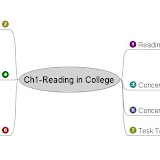 |
| CThink Maps |
Irene CRCB C1 PDF:
http://www.docsyl.com/Cthink%20Maps/CRCB%20C1.pdf
Irene Flash:
http://www.docsyl.com/Cthink%20Maps/Irene%20CRCB%20C1%20f9%20flash1.html
Joey TFY C1 Gloss PDF:
http://www.docsyl.com/Cthink%20Maps/Critical_Thinking_[Joey][1].pdf
Links
To get Freemind:
http://freemind.sourceforge.net/wiki/index.php/Main_Page
Links for getting Java Runtime:
From Sun -- http://www.download.com/Java-2-Platform-Standard-Edition-J2SE-Runtime-Environment-JRE-5-0/3000-2417_4-10495818.html?tag=lst-0-1
From Download -- http://java.sun.com/j2se/1.4.2/download.html
Link for prepositions: http://www2.actden.com/writ_den/tips/sentence/preposit.htm:
Link for Freemind tutorial: http://www.geocities.com/shaila_kishore/Freemind
Tuesday, June 19, 2007

Friday, June 15, 2007
Reading Exercise: Sehtolc Gnihsaw
Sehtolc Gnihsaw
The procedure is actually quite simple. First, you arrange the items into different groups. Of course one pile may be sufficient depending on how much there is to do. If you have to go somewhere else due to lack of facilities that is the next step; otherwise, you are pretty well set. It is important not to overdo things. That is, it is better to do too few things at once than too many. In the short run this may not seem important but complications can easily arise. A mistake can be expensive as well. At first, the whole procedure will seem complicated. Soon, however, it will become just another facet of life. It is difficult to foresee any end to the necessity for this task in the immediate future, but then, one never can tell. After the procedure is completed one arranges the materials into different groups again. Then they can be put into their appropriate places. Eventually they will be used once more and the whole cycle will then have to be repeated. However, that is part of life.
The procedure is actually quite simple. First, you arrange the items into different groups. Of course one pile may be sufficient depending on how much there is to do. If you have to go somewhere else due to lack of facilities that is the next step; otherwise, you are pretty well set. It is important not to overdo things. That is, it is better to do too few things at once than too many. In the short run this may not seem important but complications can easily arise. A mistake can be expensive as well. At first, the whole procedure will seem complicated. Soon, however, it will become just another facet of life. It is difficult to foresee any end to the necessity for this task in the immediate future, but then, one never can tell. After the procedure is completed one arranges the materials into different groups again. Then they can be put into their appropriate places. Eventually they will be used once more and the whole cycle will then have to be repeated. However, that is part of life.
Box Quiz
1. exxposure | 2. dashotrk | 3. left chicken | 4. the ears wet |
5. gegs sgeg ggse | 6. YYY men | 7. f f r r i standing i e miss e n n d d s s | 8. s t street e e t |
9. fi$$$st | 10. p i a n o | 11. dark fun | 12. sec ond |
13. nia g a r a | 14. tified with iron tified with iron tified with iron tified with iron | 15. p a y m e n t | 16. Get me |
17. s a n d s a a n n d d s a n d s | 18. cycle cycle cycle | 19. 0 Ph.D. M.A. B.A. | 20. t o w n |
Thursday, June 14, 2007
Work Ethic
The Protestant work ethic, or sometimes called the Puritan work ethic, is a Calvinist value emphasizing the necessity of constant labor in a person's calling as a sign of personal salvation. Protestants beginning with Martin Luther had reconceptualised work as a duty in the world for the benefit of the individual and society as a whole. The Catholic idea of good works was transformed into an obligation to work diligently as a sign of grace.
from: http://en.wikipedia.org/wiki/Protestant_work_ethic
from: http://en.wikipedia.org/wiki/Protestant_work_ethic
Unit 3: Work
work
NOUN: 1. Something done: act, action, deed, doing, thing. See DO. 2. Activity pursued as a livelihood: art, business, calling, career, craft, employment, job, line, métier, occupation, profession, pursuit, trade, vocation. Slang : racket. Archaic : employ. See ACTION. 3. Something that is the result of creative effort: composition, opus, piece, production. See MAKE. 4. Physical exertion that is usually difficult and exhausting: drudgery, labor, moil, toil, travail. Informal : sweat. Chiefly British : fag. Idioms: sweat of one's brow. See WORK. 5. An issue of printed material offered for sale or distribution: opus, publication, title, volume. See WORDS. 6. Informal. An amount or quantity from which nothing is left out or held back. Used in plural: aggregate, all, entirety, everything, gross, sum, total, totality, whole. Idioms: everything but (or except) the kitchen sink, lock, stock, and barrel, the whole ball of wax (or kit and caboodle) (or megillah) (or nine yards) (or shebang) . See PART. 7. A building or complex in which an industry is located. Used in plural: factory, mill, plant. See MAKE, PLACE. 8. The technique, style, and quality of working: craftsmanship, workmanship. See WORK.
VERB: 1. To react in a specified way: act, behave, function, operate, perform. See ACTION. 2. To introduce gradually and slyly: edge, foist, infiltrate, insinuate, wind2, worm. See ENTER. 3. To exert one's mental or physical powers, usually under difficulty and to the point of exhaustion: drive, fag, labor, moil, strain1, strive, sweat, toil, travail, tug. Idioms: break one's back (or neck) . See WORK. 4. To control or direct the functioning of: manage, operate, run, use. See CONTROL. 5. To turn out well: come off, go, go over, pan out, succeed, work out. Slang : click. See THRIVE. 6. To prepare (soil) for the planting and raising of crops: cultivate, culture, dress, tend2, till. See PREPARED, TOUCH. 7. To arrive at an answer to (a mathematical problem): solve, work out. Informal : figure out. See REASON. 8. To force to work: drive, task, tax. Idioms: crack the whip. See WORK. 9. To handle in a way so as to mix, form, and shape: knead, manipulate. See TOUCH. 10. To perform a function effectively: function, go, operate, run, take. See THRIVE.
PHRASAL VERB: work out To plan the details or arrangements of: arrange, lay out, prepare, schedule. See PLANNED. work out 1. To form a strategy for: blueprint, cast, chart, conceive, contrive, design, devise, formulate, frame, lay1, plan, project, scheme, strategize. Informal : dope out. Idioms: lay plans. See PLANNED. 2. To subject to or engage in forms of exertion in order to train, strengthen, or condition: drill, exercise, practice, train. See WORK. 3. To turn out well: come off, go, go over, pan out, succeed, work. Slang : click. See THRIVE. 4. To arrive at an answer to (a mathematical problem): solve, work. Informal : figure out. See REASON. work up To stir to action or feeling: egg on, excite, foment, galvanize, goad, impel, incite, inflame, inspire, instigate, motivate, move, pique, prick, prod, prompt, propel, provoke, set off, spur, stimulate, touch off, trigger. See CAUSE, EXCITE.
Roget’s II: The New Thesaurus, Third Edition. Copyright © 1995 by Houghton Mifflin Company. Published by the Houghton Mifflin Company. All rights reserved.
Tuesday, June 12, 2007
Spelling and Pronunciation
| Spelling Rules | |
| syllables | Every syllable has one vowel sound. |
| c | C can be pronounced as /k/ or /s/. |
| c | C is pronounced as /s/ before an e, i, or y (cent, city, cycle). |
| c | It is pronounced as /k/ before everything else (cat, clip). |
| g | G is pronounced as /g/ or /j/. |
| g | G may be pronounced as /j/ before an e, i, or y (gem, giant, gym). |
| g | It is pronounced as /g/ before everything else (garden, glad). |
| q | Q is always followed by a u (queen). |
| f, l,s | Double the consonants f, l, and s at the end of a one-syllable word that has just one vowel (stiff, spell, pass). |
| k | To spell the sound of /k/ at the end of a word, we use ck or k. Use ck after a short vowel (sick). After everything else, use a k (milk). |
| a,e,o,u | A, e, o, and u usually say their name at the end of a syllable (a-pron, me, go, u-nit). |
| v, j | Words do not end in v or j. We add a silent-e at the end of the word (have). |
| I,o | I and o may be pronounced as /i/ and /o/ before two consonants (kind, sold). |
| j | /J/ is spelled dge after a short vowel (edge). |
Mind Maps Links
Freemind link
http://freemind.sourceforge.net/wiki/index.php/Main_Page
Cmind from Institute for Human and Machine Cognition
http://cmap.ihmc.us/
Theory underlying concept maps and how to construct them
Tony Buzan's Mind Map:
http://www.buzan.com.au/
http://freemind.sourceforge.net/wiki/index.php/Main_Page
Cmind from Institute for Human and Machine Cognition
http://cmap.ihmc.us/
Theory underlying concept maps and how to construct them
Tony Buzan's Mind Map:
http://www.buzan.com.au/
Thursday, June 7, 2007
Musical Instrument Vocabulary
From http://www.manythings.org/vocabulary/lists/c/words.php?f=musical_instruments
accordion
agogo bells
bagpipes
banjo
baritone
bass drum
bassoon
bell lyre
bongos
bugle
castanets
celeste
cello
chimes
clarinet
claves
conga
cornet
cowbell
crash cymbal
cymbal
drum
drum set
electric guitar
euphonium
flugelhorn
flute
French horn
glockenspiel
gong
grand piano
guitar
harmonica
harp
kettledrum
lute
mandolin
maracas
marimba
oboe
orchestra bells
piano
piccolo
recorder
ride cymbal
saxophone
scraper
sizzle cymbal
snare drum
sousaphone
splash cymbal
steel drums
tenor drum
timbales
timpani
tom-tom
triangle
trombone
trumpet
tuba
vibraphone
violin
xylophone
Required text for class
Required text:
Richards, Jack C. and Samuela Eckstut-Didier. Strategic Reading 1: Building Effective Reading Skills. Los Angeles, CA: Cambridge University Press, 2006. ISBN: 0521555809.
Richards, Jack C. and Samuela Eckstut-Didier. Strategic Reading 1: Building Effective Reading Skills. Los Angeles, CA: Cambridge University Press, 2006. ISBN: 0521555809.
Where do you stand?
Where do you stand
FEET: What do I stand for as a foundation of reading comprehension?
STOMACH: What upsets me about reading comprehension?
HEART: What do I love about reading comprehension?
HANDS: What do I feel about reading comprehension?
EARS: What do I hear about reading comprehension?
EYES: What do I see about reading comprehension?
BRAIN: What do I think about reading comprehension?
Wednesday, June 6, 2007
Syllabus
ENGLISH 75 Syllabus Lincoln University
CRITICAL THINKING
Dr. Sylvia Y. R. Schoemaker profsylvia@gmail.com
Units: 3
Office hours: T-Th, 9-9:30, 12:15-1, by arrangement
Phone: 510.628.8036
Course Blog: 4cthink.blogspot.com
Objectives:
Students will develop their cognitive skills and enhance their communicative strategies for defining, applying, analyzing, synthesizing and evaluating information. The course will incorporate the following University learner and institutional goals:
University learner goals 1 -6, and specifically (3.2) To examine objectively various sides of issues; (3.3) To utilize the procedures involved in systematic problem solving; and in English:: To develop basic academic and professional skills(1); To develop the ability to communicate effective in English, oral and in writing, and to read with understanding (1.1) and institutional goals , especially 1,(1.1-1.4), 2.4
Catalog Course Description
ENG 75- CRITICAL THINKING (UNIVERSITY COURSE LISTING) Consideration of cognitive skills and communicative strategies for defining, applying, analyzing, synthesizing and evaluating information. Course includes structural and operational approaches to task/mission analysis, decision-making, change forecasting, adaptation, and evaluation. Systems approach to analysis and solution of complex problems. Conceptual issues in problem definition, goal determination and measurement of effectiveness. (3 units)
Methods and Materials
A cooperative learning model will be employed. Small group and individual discovery exercises and presentations will augment lectures, class discussions and applications.
Emphasis will be on a systems approach to analysis and solution of complex problems, a conceptual approach to issues in problem definition, goal determination and measurement of effectiveness.
Required Texts:
(TFY) Mayfield, Marlys. Thinking for Yourself. 6th Edition. Boston: Heinle, 2004. (ISBN: 0-8384-0735-8)
(CRCB) Daiek,Deborah and Macomb, Nancy. Critical Reading for College and Beyond. McGraw-Hill, 2004. (ISBN: 0072473762)
Recommended Text:
(CPS) Harris, Robert. A. Creative Problem Solving. Los Angeles: Pyrczak Publishing, 2002. ISBN: 1-884585-43-4
Student Responsibilities:
Students are expected to attend class, be punctual, follow classroom decorum, complete assignments, participate in the course in a productive manner, and to take personal responsibility for meeting the objectives of the course.
Evaluation
Students will be evaluated on the basis of all assignments, exercises, class participation, portfolios, midterm and final presentations; extra credit work/journals. Student course productivity will be averaged in appropriate proportions in determining the final grade along the following guidelines:
Classroom work:
Attendance, punctuality, decorum 10%
Productive classroom participation 10%
Class quizzes, exercises 15%
Individual/ group presentations 10%
| Week | TFY | CRCB | ||
| 1 Th 6/7 | Observation | 1 | Reading | 1 |
| Word Precision | 2 | Vocabulary | 2 | |
| 2 Th 6/14 | Facts | 3 | Memory | 3 |
| Inferences | 4 | Time | 4 | |
| 3 Th 6/21 | Assumptions | 5 | Main Ideas | 5 |
| Opinions | 6 | Details | 6 | |
| 4 Th 6/28 | Evaluations | 7 | Inference | 7 |
| MT Portfolio | Review | Texts | 8 | |
| Viewpoints | 8 | PSR Strategies | 9 | |
| 5 Th 7/5 | Argument | 9 | Marking Advanced Strategies | 10. 11 |
| 6 Th 7/12 | Fallacies | 10 | Arguments | 12 |
| Inductive Reasoning | 11 | Cognitive Domain | 13 | |
7 T /17
| Deductive Reasoning Final | 12 | Evaluating Internet Resources | 14 |
Subscribe to:
Posts (Atom)